Safer play at a casino with no Spanish licence: limits, warning signs and help
Playing with your head on
At a casino with no Spanish licence, the tools for keeping play under control sit inside each account and have to be switched on by hand. These are the limits worth setting on day one, the signs that play is getting out of hand, and where to ask for help.
Playing safely at a casino with no Spanish licence depends on you more than it does elsewhere. The tools exist, but each casino has its own, inside your account, and nobody switches them on for you. This page gathers what is worth doing before the first deposit, while you play, and when something stops going well. There are no tricks for winning: the house edge does not change with any licence or any strategy.
Before the first deposit
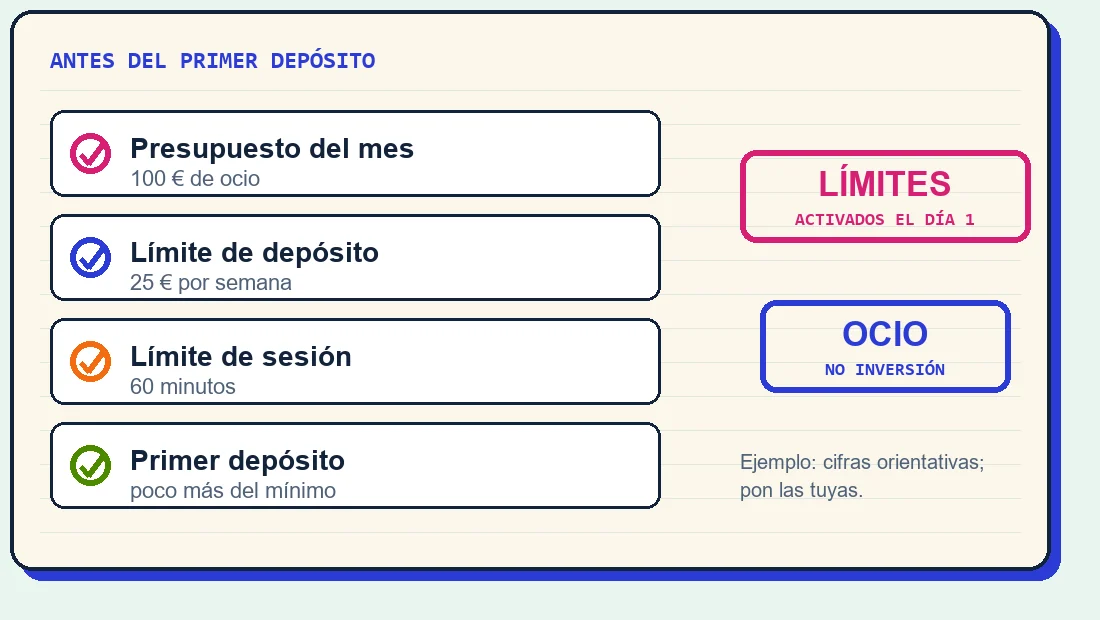
- Set a leisure budget, by week or by month, and write it down. This is money you can lose without anything important changing: not the rent, not the bills, not the savings.
- Check the casino's licence in its register. Five minutes, with the steps in how to check a casino licence.
- Read three clauses: documents, withdrawal caps and the bonus.
- Switch on the account limits before you play, not after.
- Make the first deposit small, just to confirm the road works.
The limits worth setting
Most of the casinos on our list of casinos with no Spanish licence offer these limits in the account, or switch them on through the chat on request:
- A deposit limit by day, week or month. The most useful one: it stops you topping up in the heat of the moment.
- A loss limit. It cuts in when you have lost a set amount over a period.
- A bet limit. A ceiling on a single stake.
- A session limit or a time reminder. It warns you, or logs you out, once the time you chose is up.
- A cooling-off period from a day to several weeks.
- Self-exclusion: closing the account for months or for good.
Two details matter. Lowering a limit is usually immediate; raising it, at many casinos, deliberately takes a few days. And each limit works only at the casino where you set it: if you hold accounts at several, they have to be set at all of them.
Cryptocurrency and keeping track of spending
Playing in crypto has a psychological trap: a balance in USDT or BTC feels less like money than a balance in euros. Three habits help:
- Think in euros. Translate the figure before every deposit.
- Use one wallet for playing only, with the month's budget in it and nothing else.
- Withdraw your winnings, however small, instead of leaving them in the balance to carry on with.
The steps for depositing and withdrawing, and what each one costs, are in deposits and withdrawals.
Signs that play is getting out of hand
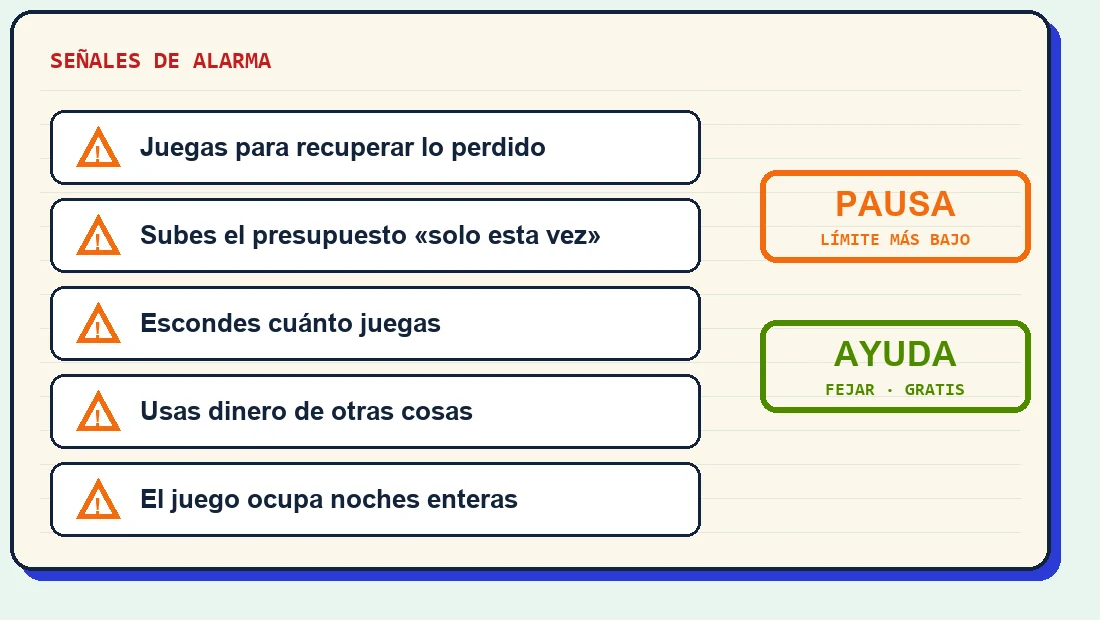
- You play to win back what you lost.
- You raise the budget “just this once”, and it happens again.
- You hide how much you play, or how much you have lost.
- You borrow money, or use money meant for other things, to play.
- You think about playing when you are not playing, or being unable to play irritates you.
- What started as a bit of leisure takes up whole evenings.
A single one of these is already reason to stop and set a lower limit or a break. Several together are reason to ask for help.
Where to ask for help
FEJAR, the Spanish federation of rehabilitated gamblers, helps players and their families free of charge and has member associations in many cities. Talking to someone who knows the problem, early, is what helps most. If play is affecting someone close to you, you can call on their behalf.
Inside the casino, the fastest route is self-exclusion: from the account, or by asking the chat for it. Ask for it to apply to the loyalty programme and to promotional emails as well.
When something goes wrong with a payout
A withdrawal that does not arrive is a risky moment in itself: the temptation is to keep playing with the balance while you wait. Do not. Write to support with the transaction ID, keep the replies, and do not agree to pay anything to “unlock” a withdrawal — no legitimate casino asks for that. If the casino's licence has been checked, that licence and its holding company are the details to have to hand.
The bonus is part of playing safely too: a bonus with high wagering pushes you to bet more than you meant to. If you would rather not carry that pressure, turning it down is a reasonable choice, as we explain in bonuses and wagering.